I am a design researcher and associate professor of Interaction Design. My research explores how we can design technologies that foster meaningful relations between humans, data, and the body, particularly in contexts of health, wellbeing, and sports. I study how people interpret and live with personal health technology and data, and how design can transform numbers into understanding of behaviour and behaviour change.
My research bridges industrial design, human–computer interaction, and embodied practice, focusing on how people interpret and live with personal data. I study the lived experience of tracking, reflection, and AI-based feedback, moving from self-tracking toward self-understanding.
Over the past decade, I have built a vibrant, interdisciplinary research line on human-data interactions, health self-tracking, and technology supported health self-management. My work has been published in leading venues such as CHI, DIS, International Journal of Human-Computer Interaction, Interacting with Computers, and Behaviour & Information Technology, and has twice received ACM Honourable Mention Best Paper Awards (CHI 2024, DIS 2023 – top 4–5% of papers). I also co-authored the “Grand Challenges in SportsHCI” paper and regularly contribute to shaping this emerging international community.
My research leadership is reflected in numerous competitive funded projects, including an NWO-SSH Open Competition XS grant (2023) on trust in AI-supported personal health decision-making, multiple VU-UT Research Coalition grants, and a PIHC innovation fund (2023). I supervised several post-graduate researchers and currently supervise four PhD candidates working on design of
- goal setting in personal informatics (Tina Ekhtiar),
- data visusalisations in women's health (Danique Hoftsee),
- child-voice interaction for physical-social play (Ezgi Çakır),
- wearable stress management technology (Merel van den Berg).
At UT, I coordinate the Human-Technology Relations master’s track (IDE) and teach topics around design research, data-driven design, and design and behavior change. I also collaborate closely with the TechMed Centre, Sports Data Valley, and the Women’s Health Research & Innovation Networks. My teaching and mentoring were recognised through Senior University Teaching Qualification (SUTQ, 2021) and leadership in curriculum renewal across the IDE programme.
As an endurance runner and CrossFit enthusiast, I use my own body–data interface as a living design lab to explore how technologies shape experience, motivation, and recovery. These embodied insights inform both my design methods and my critical perspective on what it means to “live with data.”
For more up-to-date information, please check my website: www.armagank.com
Expertise
Social Sciences
- Self-Tracking
- Human Computer Interaction
- Computer Science
- Dutch
- Higher Education
Computer Science
- Interactivity
- User Experience
- Semistructured Interview
Organisations
Publications
2026
2025
Research profiles
I teach courses primarily focused on human-centred design, interaction design, creativity and design thinking, and design for behaviour change. I currently contribute to the Industrial Design Engineering (IDE), Creative Technology, and Interaction Technology programs. Since September 2024, I have been coordinating the Human-Technology Relations master's track of the IDE program.
Affiliated study programs
Courses academic year 2026/2027
Courses in the current academic year are added at the moment they are finalised in the Osiris system. Therefore it is possible that the list is not yet complete for the whole academic year.
Courses academic year 2025/2026
Address
University of Twente
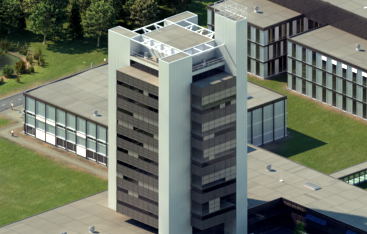
Horst Complex (building no. 20), room W254
De Horst 2
7522 LW Enschede
Netherlands
University of Twente
Horst Complex W254
P.O. Box 217
7500 AE Enschede
Netherlands
 Scan the QR code or