Champika is a lecturer in Computer Science at the Faculty of Electrical Engineering, Mathematics, and Computer Science (EEMCS) and is a member of the Data Management and Biometrics (DMB) group. Her journey includes a PhD from the Situated Computing and Interaction group of the University Munster, Germany (Magna cum laude), under the supervision of Christian Kray (main supervisor) and Susanne Boll (examiner), two Master's degrees (Master in Electronic and Telecommunication Engineering, and a Master in Information Technology) and a BSc (Honours) degree in Statistics and Computer Science. Before joining the University of Twente, Champika worked as a Content Manager at Innodata and as a Senior Lecturer at the University of Moratuwa in Sri Lanka.
Grants:
- Pioneers In Healthcare Innovation Fund 2025 (Main Applicant) (link) | Title: SmartRoll: A Smart, situated physical activity guidance system for stimulating frail older adults rehabilitating after a hip fracture surgery
- University of Twente, EEMCS Internal Research Voucher 2025 (Main Applicant) | Title: TRUPA: Trusted Physical Activity Guidance for Frail Older Adults
- 4TU.NIRICT (Netherlands Institute for Research on ICT) funding (June, 2026) for establishing a Joint Interdisciplinary Cognitive Futures Lab (between TU Delft, TU Eindhoven, University of Twente) (Co-applicant).
- 4TU Design United Probe Funding 2025 (Co-applicant) | Title: Tangible Mind - Cognitive Data Physicalisation for Sense Making and Self-Reflection
- University Grants Commission, Sri lanka, Research Grant (2014) (Main Applicant) | Title: Adapting Navigation Support to Positional Information of Varying Quality.
- Prof. V K Samaranayake Research and Conference Grant (2013) (Main Applicant), LK Domain Registry, Sri Lanka.
Awards
- SmartRollator Project - Pioneers in Healthcare Innovation Award - 2025 (link), January 2026.
- SmartRollator Project: Finalist in the Dutch Geriatric Innovation Award 2026 (SmartRollator Project) (link), Dutch Association for Clinical Geriatrics (Nederlandse Vereniging voor Klinische Geriatrie (NVKG)), February 2026.
- Best Data-driven Healthcare Solution Award at Dutch Hacking Health 2018, Utrecht, Netherlands. (Link)
Conference Commitees:
- ACM Interactive Health (IH) 2026, Porto, Portugal, July 5-8, 2026. Member of the Programme Commitee (Short Forms). <link>
- ACM Interactive Health (IH) 2026, Online pre conference event, June 1, 2026. Session Chair (Health Information). <link>
- ACM MobileHCI 2020 (International Conference on Human-Computer Interaction with Mobile Devices and Services), 2020, Oldenburg, Germany; Chair : Student Competition. <link>
- ACM MUM 2020 (International Conference on Mobile and Ubiquitous Multimedia), 2020, Essen, Germany; Chair : Posters <link>
- IEEE ITSC 2013 (IEEE Intelligent Transportation Systems Conference), 2013, Den Haag, Netherlands; Session chair (Session: " Data Mining and Data Analysis II")
Memberships/ Working Groups
- Dutch Man-Machine Interaction Platform <link>
- ACM Special Interest Group On Computer-Human Interaction (ACM SIGCHI) <link>
- Data Physicalization Wiki <link>
Supervision
- PhD Supervision/ PhD Committees
- Member of the PhD Committee of Vanessa Georges, Polytechnique Montréal, Quebec, Canada (Defended on 20.08.2025) : Thesis Title: Exploring the Use of Neurophysiological Signals as a Design Material for Affective Data Visualization, Somatic Interaction and Physicalization. <link>
- Bachelor and Master Thesis Supervision (Computer science, Creative Technology, Biomedical engineering, Interaction technology, Human centered interaction design):
- 15 Master thesis supervisions
- 61 Bachelor thesis supervisions
Organisations
I am an HCI researcher with a special focus on healthcare interaction technology and human-data/AI-interaction. I design innovative ways to transform digital healthcare data and coaching into novel forms (data physicalizations and sensifications), interactions, and experiences that engage and stimulate people towards a healthy lifestyle, empower people to self-manage their health conditions and support shared decision making. This includes exploring innovative ways to acquire, model, present, and embed complex healthcare data (including physiological, behavioral, and environmental data) to facilitate situated interaction with data and coaching. In contrast to current approaches that prioritize data access over sensemaking, I explore novel ways to make data interaction-triggering and enhance sensemaking from data. I put human factors and ergonomics at the center of healthcare solution design and involve stakeholders in every stage of the design and evaluation process. I follow a human-centered and design thinking-driven approach, utilizing participatory design, co-creation, and collaborative design methods, as well as smart and ubiquitous sensing and actuation technologies, to design solutions that motivate people to participate and engage.
Publications
Jump to: 2026 | 2025 | 2024 | 2023 | 2022 | 2021 | 2020 | 2019 | 2018
2026
2025
2024
2023
2022
2021
2020
2019
2018
Research profiles
Courses academic year 2026/2027
Courses in the current academic year are added at the moment they are finalised in the Osiris system. Therefore it is possible that the list is not yet complete for the whole academic year.
Courses academic year 2025/2026
- PIHC in UTwente website: https://www.utwente.nl/en/techmed/innovation/funds-vouchers/pioneers-in-healthcare/awarded-projects/#vouchers-2025-awarded-on-19-january-2026
- eCMC (Expertise Center for eHealth Innovation): https://www.e-cmc.nl/innovaties/bloomi
- PIHC in MST website: https://www.mst.nl/nieuws/pihc-2025
- PIHC in Saxion: https://www.saxion.nl/nieuws/2026/januari/pioneers-in-healthcare-vouchers-uitgereikt-innovaties-die-de-zorg-vormgeven
Address
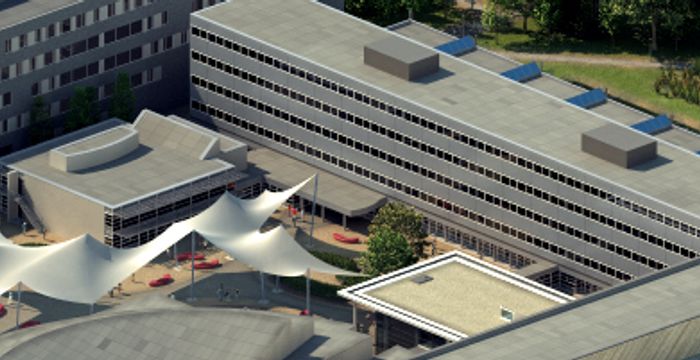
University of Twente
Zilverling (building no. 11), room 4047
Hallenweg 19
7522 NH Enschede
Netherlands
University of Twente
Zilverling (building no. 11), room 1054
Hallenweg 19
7522 NH Enschede
Netherlands
University of Twente
Zilverling (building no. 11)
Hallenweg 19
7522 NH Enschede
Netherlands
University of Twente
Zilverling 4047
P.O. Box 217
7500 AE Enschede
Netherlands
 Scan the QR code or