I am an organic and polymer chemist by training. I obtained my PhD in chemistry at UNC Argentina, on the synthesis of polymeric materials for sensing and antifouling applications. Then, I moved to the FU Berlin to investigate biofunctional polymeric-protein surfaces. Afterwards, as Postdoc, I joined the Max-Planck Institute for Polymer Research in Mainz, where I developed photoactivatable peptides for cell-instructive materials and functional polymers for tissue gluing applications.
With the aim to apply chemical concepts and tools for health technologies, I moved to INM – Leibniz Institute for New Materials in Saarbrücken, Germany, first as Research Scientist and then as Project Leader. There, I developed novel coupling chemistries for bioconjugation and gelation under physiological conditions.
In 2021, I joint the Developmental Bioengineering group at the UTwente. My lab develops innovative chemical tools to enable smart hydrogels for advancing healthcare. For this, we employ tools from synthetic organic and polymer chemistry, biomaterials science, engineering and cell biology. In collaboration with colleagues from the TechMed Centre and the MESA+ Institute, at the University of Twente, we integrate our biomaterials with various key enabling technologies (stem cells, biofabrication, nanosensors, organ-on-chip devices, minimally invasive delivery). This combination allows us to fabricate, characterize and validate advanced tissue models and bioadhesives for soft tissue repair. Current application examples of our biomaterials are supramolecular hydrogels for cell culture and bioengineering, injectable hydrogels that release nitric oxide for cardiac tissue repair, and animal-free scaffolds for tumor-on-chip modelling.
Expertise
Material Science
- Hydrogel
- Nanoparticle
- Polyethylene Glycol
Neuroscience
- Thiol
- Polyacrylamide
- Peptide
- Cell Culture
Chemistry
- Chemical Kinetics Characteristics
Organisations
SMART, SYNTHETIC BIOMATERIALS TO ADVANCE BIOENGINEERING
The Paez Lab is situated at the Developmental BioEngineering (DBE) group within the BioEngineering Technologies (BET) department, the TechMed Centre, and the MESA+ Institute. Our team bridges chemistry, biology and biomedical engineering to solve critical healthcare problems. We envision a healthcare revolution powered by smart, living materials that seamlessly merge with human biology to model, study and ultimately cure diseases.
Our VISION
To engineer synthetic, nature-inspired soft biomaterials that mimic the dynamic complexity of living tissues and can integrate with them. We aim to replace traditional animal testing models with reliable, synthetic, animal-free platforms; as well as to develop innovative bioengineering technologies to help patients improve their quality of life.
Our MISSION
To develop smart hydrogel biomaterials using rational molecular design. By fusing organic chemistry, polymer science, cell biology, materials science and various key enabling technologies, we code specific properties into biomaterials enabling them to self-heal, stick, communicate with cells and degrade on command. These innovative tools and platforms are designed to seamlessly integrate with living cells and tissues to target explicit medical scenarios, such as repair hearts, combat tumors, and heal lungs.
We accomplish our mission through a highly interdisciplinary approach focusing on key translation pipelines:
- Pre-Programmed Material Behavior: Leveraging cutting-edge chemistry to instill smart behavior directly into materials, and investigating how such materials integrate with living systems. This includes producing controllable mechanical gradients into tissue scaffolds or introducing biosensing capabilities into advanced tissue models.
- Targeted Healthcare Applications: Translating fundamental biomaterials chemistry into practical therapeutic solutions that can help patients. For this, we synergize our biomaterial tools with biomedical devices and technologies. Our ongoing research projects actively target several medical breakthroughs:
- Cardiovascular Care: Injectable, gasotransmitter-releasing hydrogels to assist in heart repair.
- Cancer: Engineering synthetic microenvironments to model breast cancer tumors.
- Pulmonology: Developing specialized lung-adhesive hydrogels to treat severe lung diseases.
Check publications from our lab in the links below
Publications
2026
2025
2024
2023
2022
Research profiles
I am an enthusiastic teacher in the chemical science and biomedical engineering programs at the University of Twente, both at the bachelor and master levels. I completed my University Teaching Qualification at the UT.
Courses academic year 2026/2027
Courses in the current academic year are added at the moment they are finalised in the Osiris system. Therefore it is possible that the list is not yet complete for the whole academic year.
Courses academic year 2025/2026
Supramolecular hydrogels for cell culture and bioengineering
In the Rhythm project (MSCA PF) and in collaboration with UTwente partners, we develop nucleic acid inspired, supramolecular hydrogels for cell culture and bioengineering applications. These matrices present mechanically tunable properties (e.g., viscoelasticity, self-recovery, stress relaxation) within physiologically relevant values, are ion-conductive and cytocompatible against diverse cell types. This makes these biomaterials suitable for cell culture applications, and in particular for engineered heart tissue devices.
Biomaterials that release gasotransmitters as therapeutic agents to promote cardiac tissue repair
In the NORPROS project via a binational collaboration between the Netherlands and Brazil, we are developing new treatment strategies in the field of regenerative cardiovascular medicine. Specifically, we are developing hydrogel bioadhesives that can be applied to the heart and release active principles to promote a better recovery of the heart muscle after myocardial infarction.
Animal-free hydrogel scaffolds to model the breast tumor microenvironment
In one transdiciplinary project funded by NWO, we collaborate with multiple academic, industrial and societal partners; to develop a smarter model of a breast tumor, which will be used to test novel immunotherapies. Our contribution to this project concerns the development of smart hydrogel matrices to embed the tumors within microfluidic devices. Such matrices are physiologically relevant and sense important physical chemical parameters that evolve during tumor progression. Check more here:
In a complementary binational project funded by SNSF, we work alongside the teams of Prof. Séverine Le Gac (UTwente) and of Dr. Albert Ruggi (University of Fribourg, CH) to develop fully synthetic, highly tunable hydrogels that can host the tumor. We use click chemistry to tailor the biochemical and biophysical properties of these hydrogels.
See media coverage of our work here:
Address
University of Twente
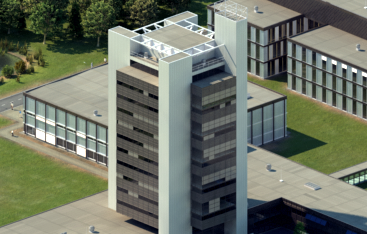
Horst Complex (building no. 20), room ZH133
De Horst 2
7522 LW Enschede
Netherlands
University of Twente
Horst Complex ZH133
P.O. Box 217
7500 AE Enschede
Netherlands
 Scan the QR code or